This guide explains why they cause problems and shows you how to safely remove them.
Table of Contents
Why You Should Remove Unused Plugins
Yes, if the plugin provides essential functionality. To avoid this, always deactivate the plugin first and thoroughly test your website’s key features to ensure everything still works as expected before proceeding with deletion.
Enhanced Security
You can test plugin removals in staging, confirm everything works, and deploy changes with confidence.
Improved Performance
Many plugins add files and database entries that remain after deactivation. They increase backup sizes and sometimes still load assets. Removing them reduces bloat and can help your site load faster.
Simplified Maintenance
Suggested read: How to Block WordPress Spam Comment Bots With Fail2ban Rate Limiting
Reduced Bloat
Follow these simple steps to clean up your WordPress installation.
Why Deactivation Isn’t Enough
Cleaning up unused plugins is easier when you can test changes safely and securely.It’s a good practice to review your installed plugins every three to six months. This regular audit helps ensure that you are only keeping the plugins that are necessary, up to date, and beneficial for your site’s functionality.
How to Identify and Remove Unused Plugins
Search engines like Google favor websites that are fast and secure. By removing unused plugins, you reduce code bloat and potential security vulnerabilities, which improves your site’s loading speed and overall health. This sends positive signals to search engines that can boost your rankings.
Step 1: Identify Unused Plugins
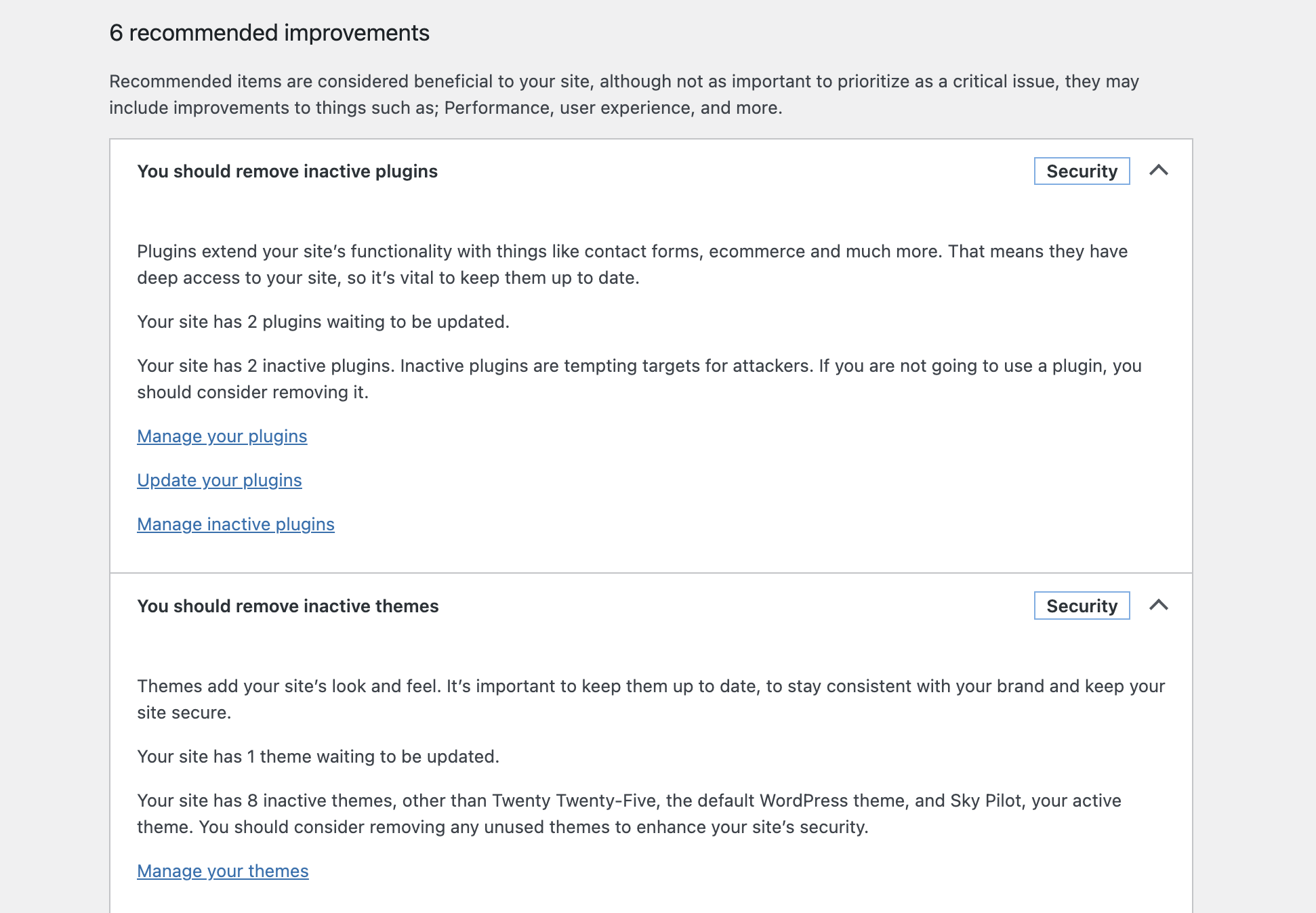
Think of it this way: even if the plugin isn’t “on,” its code is still present and accessible. Hackers and malicious bots are constantly scanning the web, not just for active vulnerabilities, but for the mere presence of specific plugin files known to have security flaws. If a known vulnerability exists in a deactivated plugin, its files can still be scanned and exploited. Removing the plugin avoids this risk entirely.
- What function does this plugin perform?
- Is this functionality still necessary for my website?
- Is there a better way to achieve this without a plugin?
- When was the last time I used this plugin’s features?
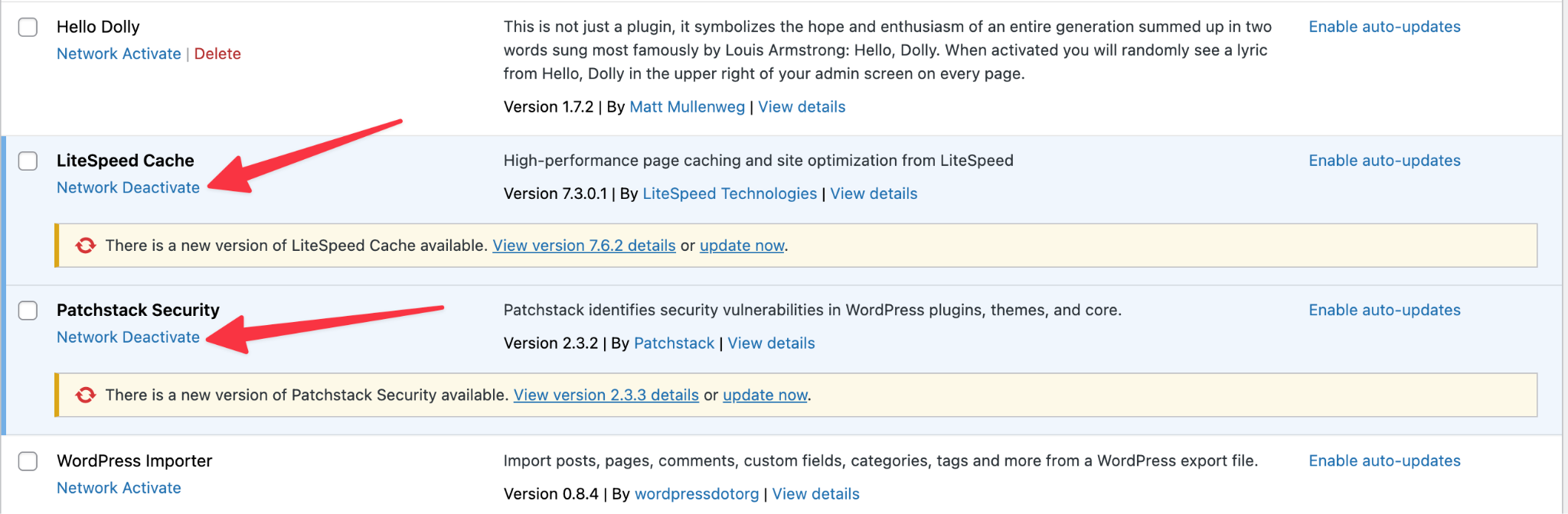
After deactivating the plugin, a “Delete” option will appear. Click on it. WordPress will ask for confirmation before permanently removing the plugin’s files. Confirm the deletion.Leaving inactive or unused plugins on your WordPress installation is a significant liability. Here’s why you should clean them up:
Step 2: Deactivate the Plugin
As we’ve seen, keeping your WordPress site free of unused plugins is a powerful step towards a faster, more secure, and easier-to-manage website. By removing unnecessary plugins, you can eliminate security vulnerabilities and reduce performance-draining code.
Step 3: Delete the Plugin
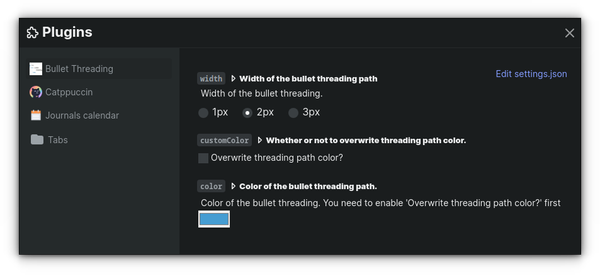
Go to Plugins in the WordPress dashboard and review each installed plugin. For each one, check whether you still use it and whether the functionality is truly needed.

RunCloud provides a simple and reliable way to manage WordPress sites, featuring one-click staging, automated backups, and performance-focused server setups.Inactive plugins still leave their files on your server. If a vulnerability is found, attackers can target those files directly. Removing unused plugins closes those entry points.
Test Plugin Changes Safely with RunCloud
Take the risk out of managing WordPress. Use RunCloud to create a staging site, test plugin changes safely, and run your site on a fast, secure server setup.If you think you might need a plugin again, you can simply reinstall it from the WordPress plugin repository. However, for plugins you are certain you won’t use, complete removal is the best way to keep your site lean and secure.No, they are not the same. Deactivating a plugin simply turns it off, but its files remain on your server, posing a potential security risk. Deleting the plugin completely removes its files, which is the recommended practice for better security and performance.If you’re unsure about a plugin, try deactivating it and checking your website to see if any issues arise. This can help you determine if it’s safe to remove.Suggested Read: How to Easily Change Your WordPress Site URLMany WordPress site owners believe that if a plugin is deactivated, it’s harmless. While it’s true that deactivating a plugin prevents it from actively running on your site, this is only a half-measure that creates a false sense of security. The reality is that the plugin’s files are still sitting on your server.