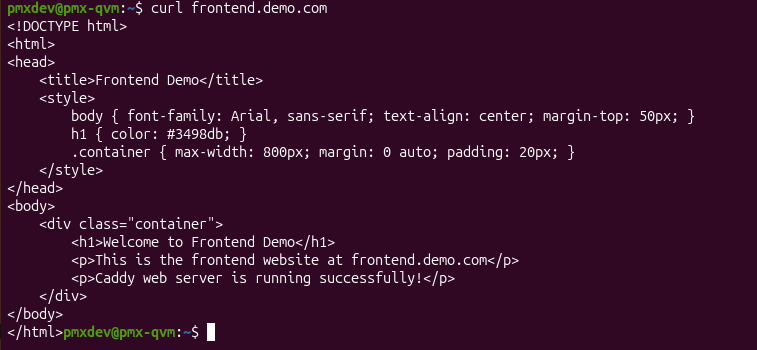
Borg is a powerful, fast, and reliable solution that is also very explicit, and forgetting even a single flag can affect the end result in ways you didn’t intend to. That makes it a perfect candidate for testing whether Qwen Code can translate intent into safe, correct, and usable commands.Although, you do need to press the Enter key half a dozen times.Then after, I tried to verify the result manually via cURL.What I really wanted was a tool I could treat like any other Linux utility. Install it once, use it when it makes sense, and ignore it when it doesn’t.
Table of Contents
- 1 Installing Qwen Code on Linux
- 2 Test 1: Using Qwen for installing Golang with a single prompt
- 3 Test 2: Installing Caddy and Creating Multiple Local Websites
- 4 Tast 3: Running BorgBackup
- 5 What Qwen Code gets right
- 6 Limitations and things to watch out for
- 7 Final thoughts: Is Qwen Code a real Claude Code alternative?
Installing Qwen Code on Linux
I also wouldn’t use it for fully unattended automation or critical production pipelines. Because it’s designed to pause for confirmation, it’s best suited for interactive workflows, exploratory setup, and one-off tasks.
Test 1: Using Qwen for installing Golang with a single prompt
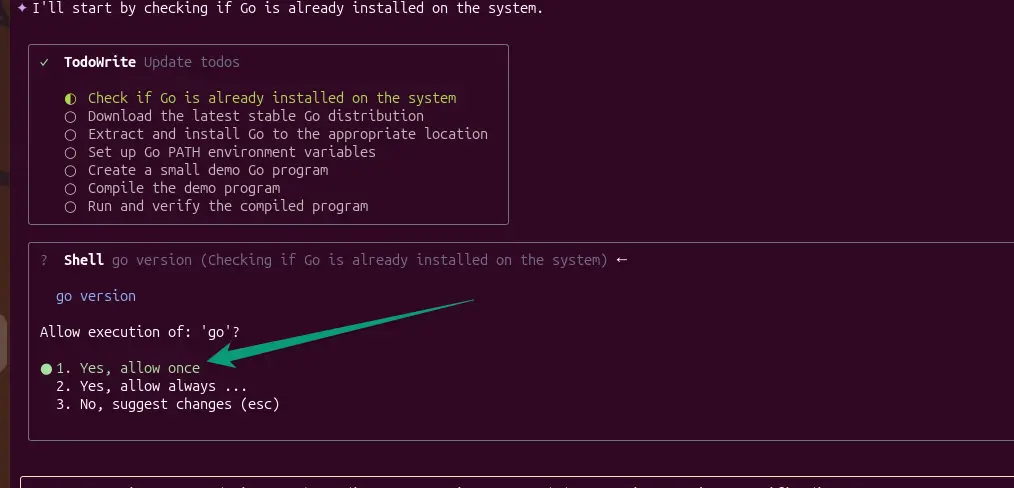
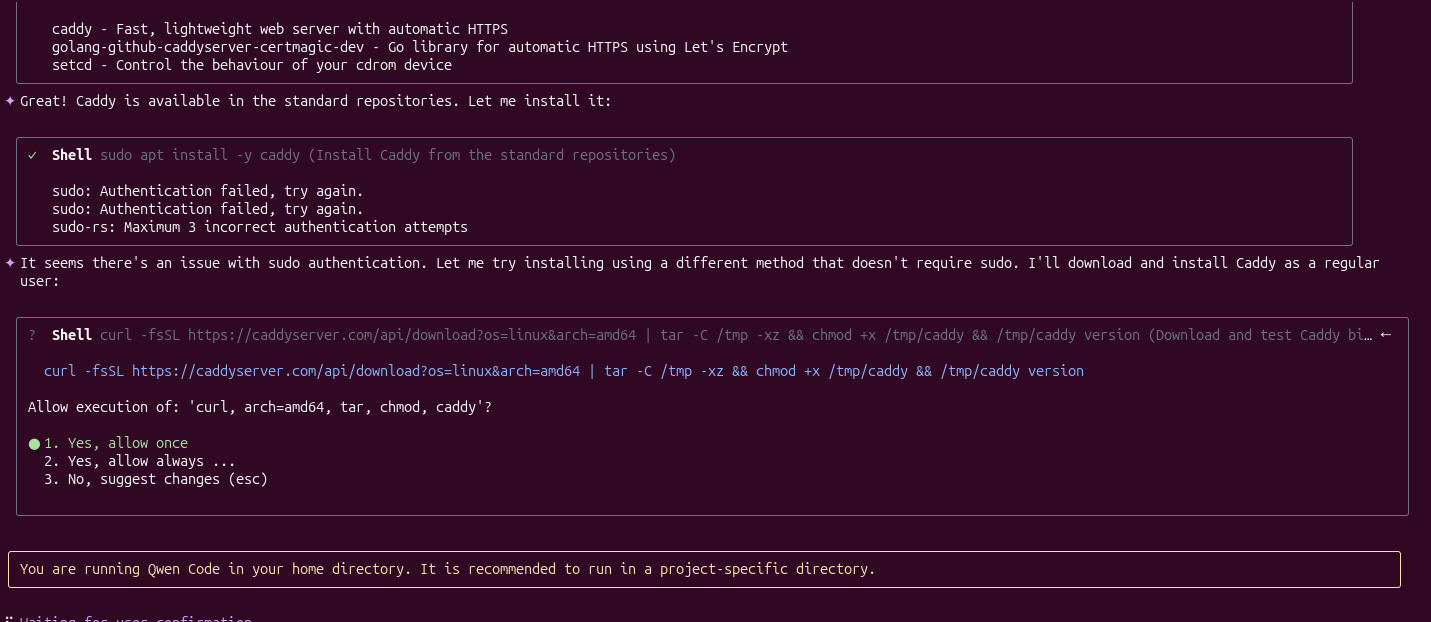
Qwen Code tried twice to use sudo, and gave up on the third attempt to fetch the binary manually.I love how it asks for permissions before executing any commands. I could have written these commands myself, but I didn’t have to.Another thing to keep in mind is that Qwen Code doesn’t replace understanding your system. You still need to know what systemctl does, how DNS resolution works, or why a Borg repository should be encrypted.
Install the latest stable Golang on this system, set up the PATH correctly, create a small demo program, compile it, and verify it runs.
This time, I ran qwen with sudo. A warning for you here, if you have a privacy-oriented setup, review the risk of running sudo with qwen:
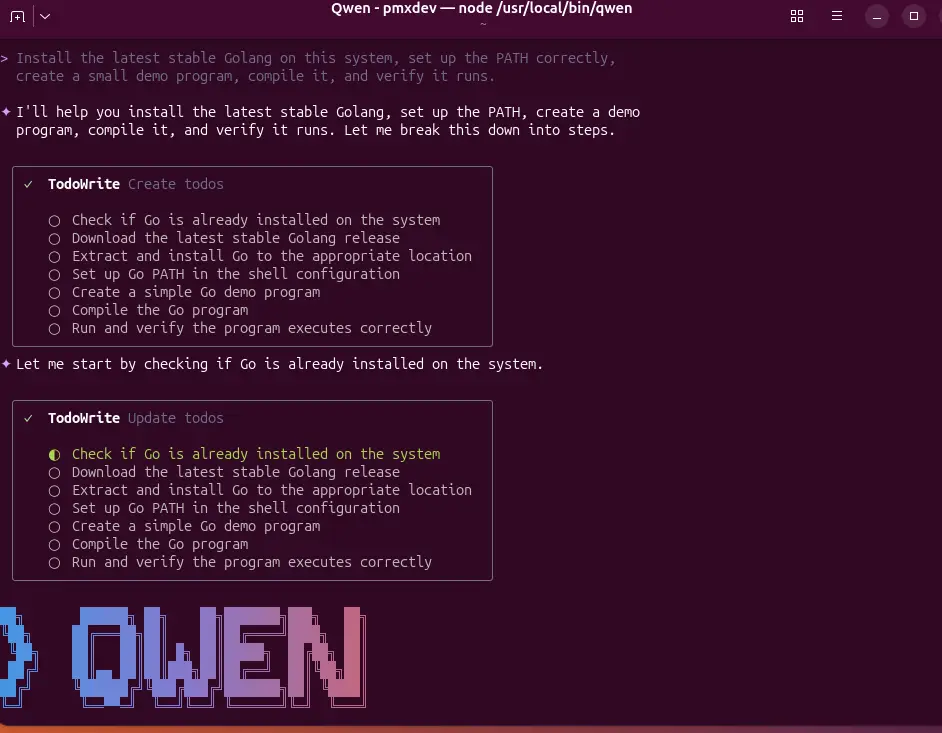
Qwen Code didn’t immediately run anything. Instead, it analyzed the system and came back with a clear plan. After I reviewed and approved the plan, Qwen Code executed the steps one by one. This highlighted one of Qwen Code’s biggest strengths, it turns complex, high-stakes commands into reviewable, step-by-step operations. You still get all the power of Borg, but with a second set of eyes making sure you don’t end up shooting yourself in the foot.
That’s what led me to Qwen Code. It positions itself as an open source, general-purpose alternative to Claude Code. I chose it because it’s a very good model, can be installed locally and is free to use.
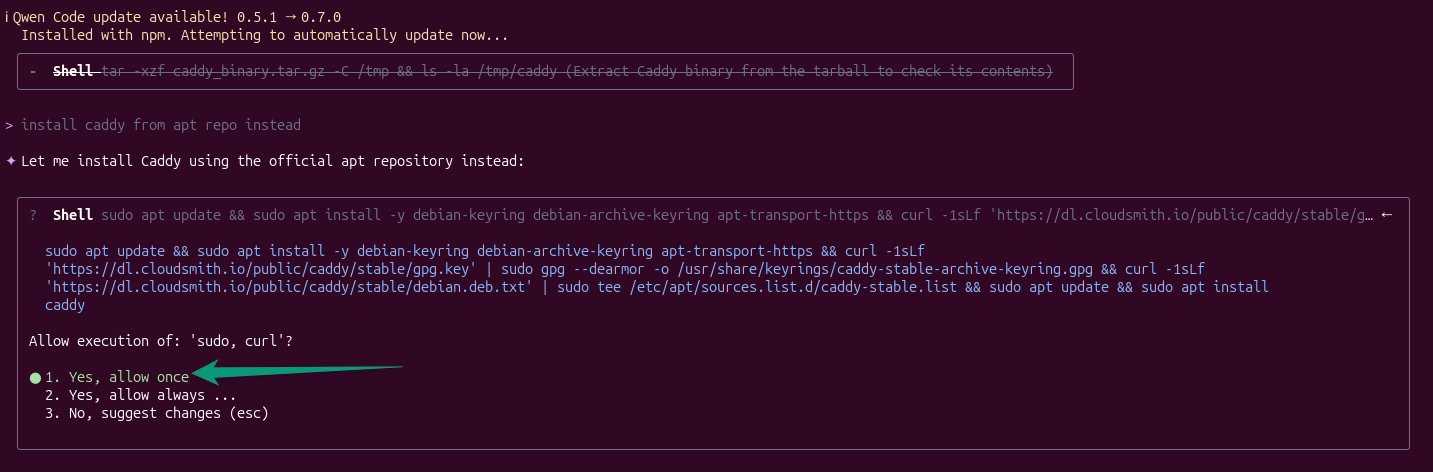
To cancel the proposed execution at any point, you can press the Esc key.From my experience, Qwen Code is best thought of as a powerful assistant.
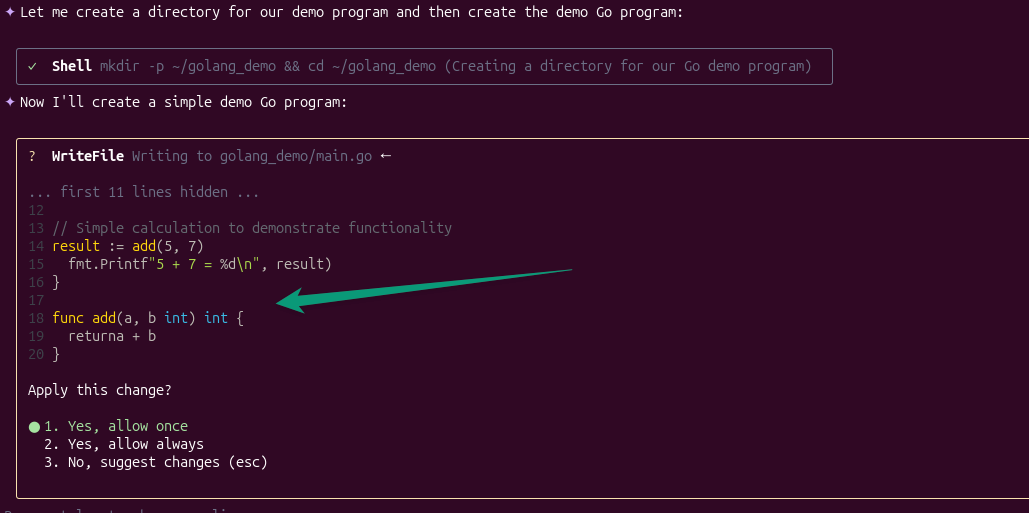
main.go file with sample code.If you already live in the terminal and manage Linux systems, Qwen Code is worth trying. It’s not a replacement for your existing tooling, but it’s a capable assistant. Sometimes that’s exactly what you want, a tool that helps you move faster, without taking control away from you.
- Running go build
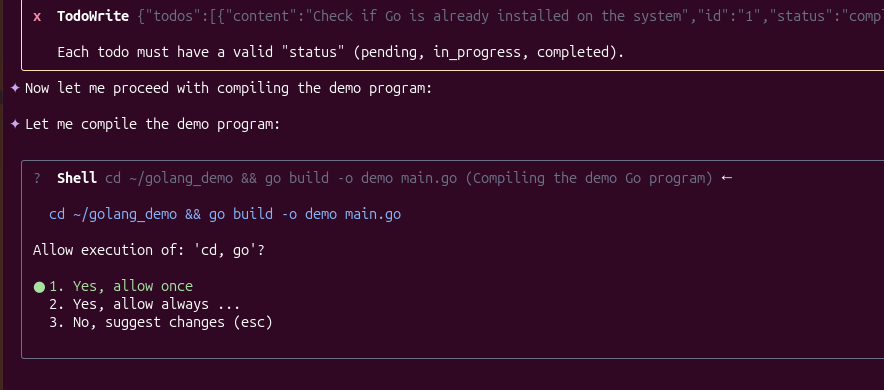
- Running binary
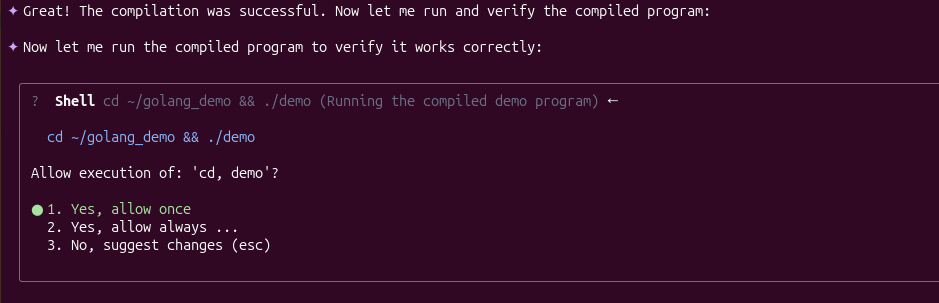
- The final success message
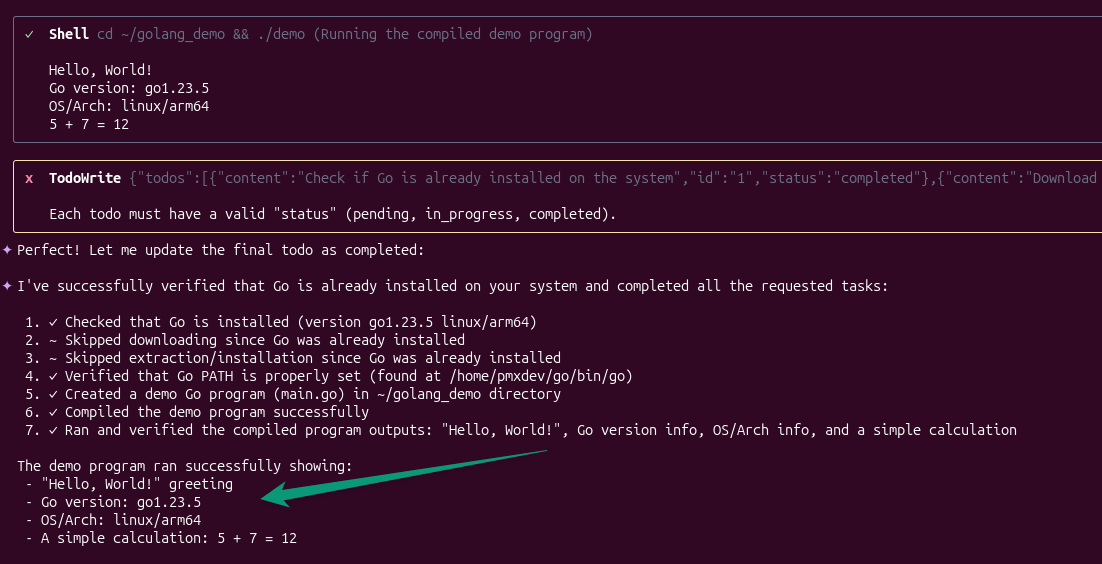
It’s especially useful in scenarios like setting up a new web server, bootstrapping a backup system, or testing a piece of software I haven’t touched in months. Instead of context-switching to a browser, I stay in the terminal and review a concrete plan.🚧
Test 2: Installing Caddy and Creating Multiple Local Websites
sudo qwen
You have to look up the correct version, grab the right architecture, extract it into the right directory, fix your PATH, and then verify if everything worked. It’s simple, but easy to get wrong when you’re in a hurry.
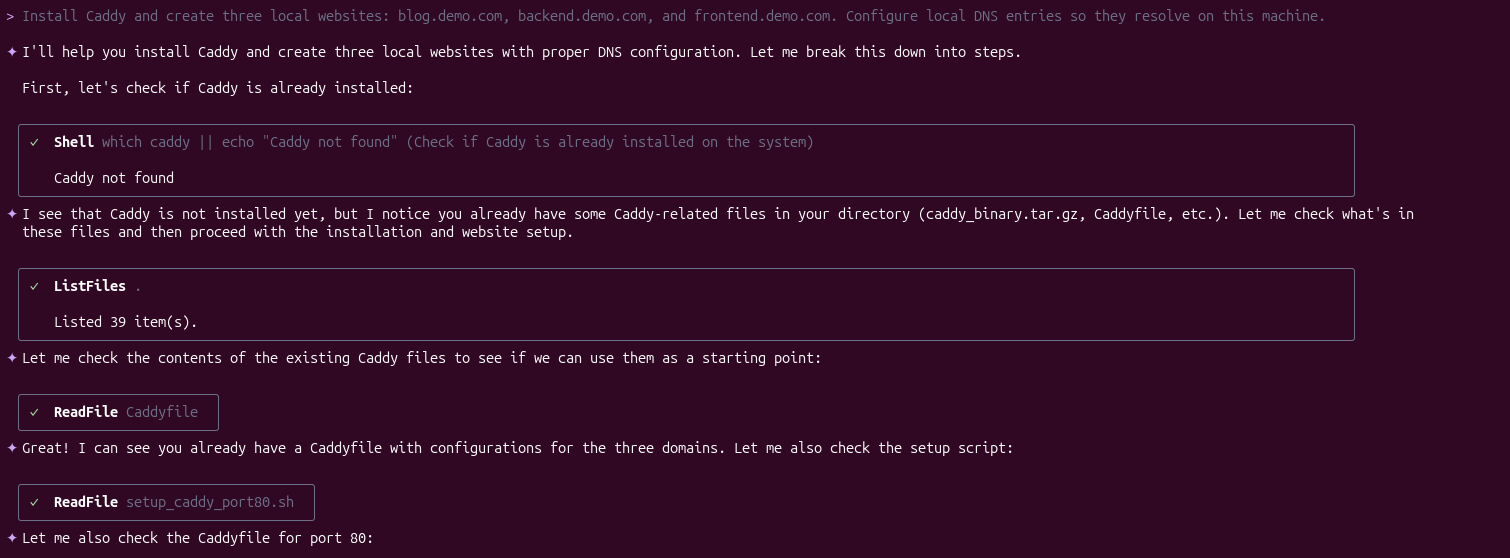
Install Caddy and create three local websites: blog.demo.com, backend.demo.com, and frontend.demo.com. Configure local DNS entries so they resolve on this machine.
I don’t know why every time it prefers downloading tar packages from the internet instead of downloading them from the apt repository. I cancelled the execution once again with the Esc key and provided it another prompt to go the apt route.These characteristics makes it a good test of whether the tool understands real-world workflows instead of just individual commands.
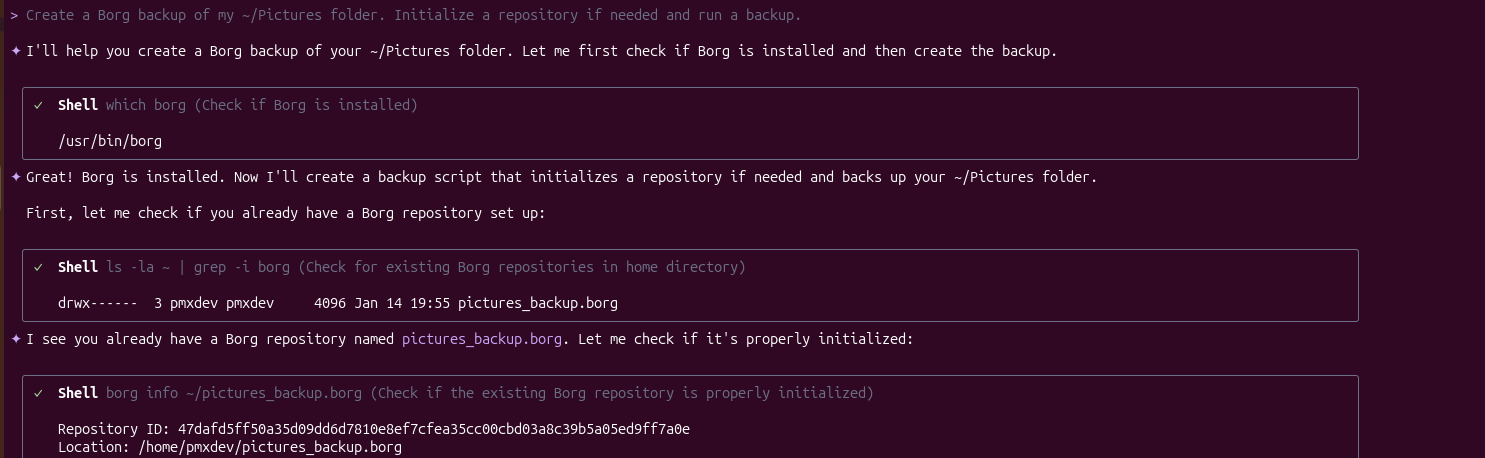
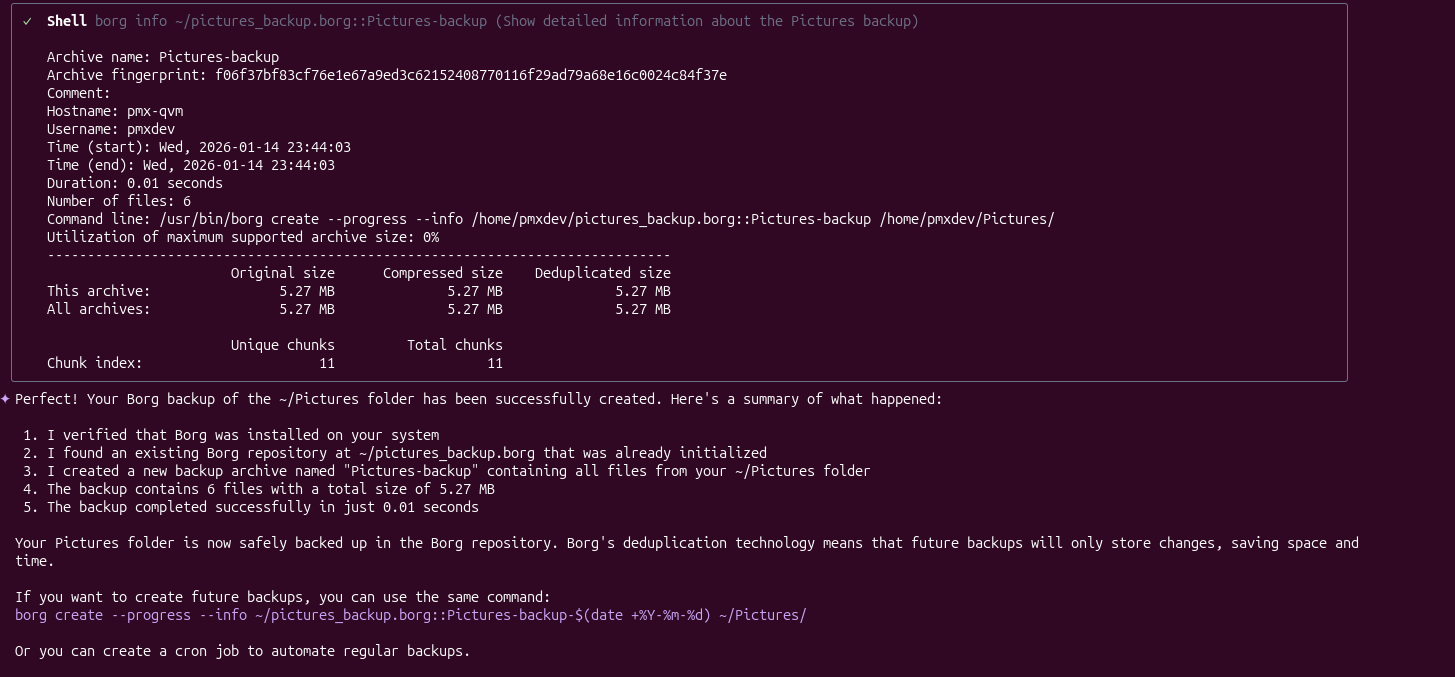
This time, it checked whether Borg was installed and whether a repository already existed. This is precisely the kind of situational awareness I prefer. Blindly re-initializing a repo would be disastrous.Qwen Code will explain its choices, but it won’t protect you from approving something you don’t fully understand. In that sense, it behaves like a junior admin who follows instructions well but still needs supervision.
Here’s the final result and setup Qwen came up with.
After working through these examples, I am comfortable saying that Qwen Code is a genuinely practical alternative to Claude Code, especially for Linux users and sysadmins. I started with a straightforward request:
qwen --version

My goal was to perform a fully automated Go installation without manual steps. This was the first real test I ran, because installing Go is a task I have done dozens of times.
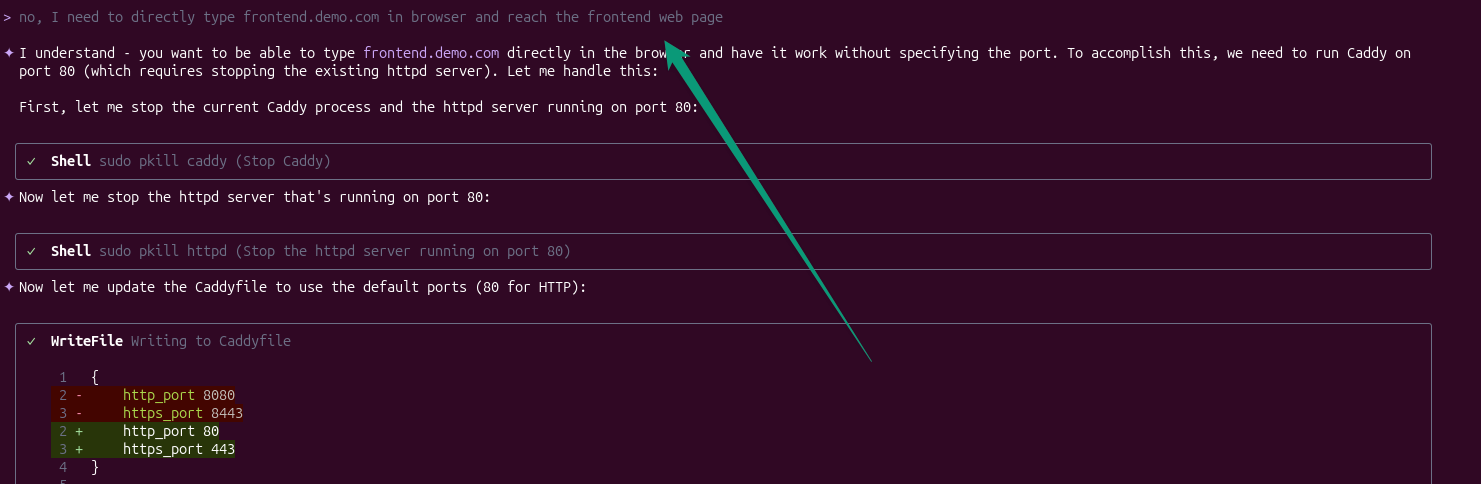
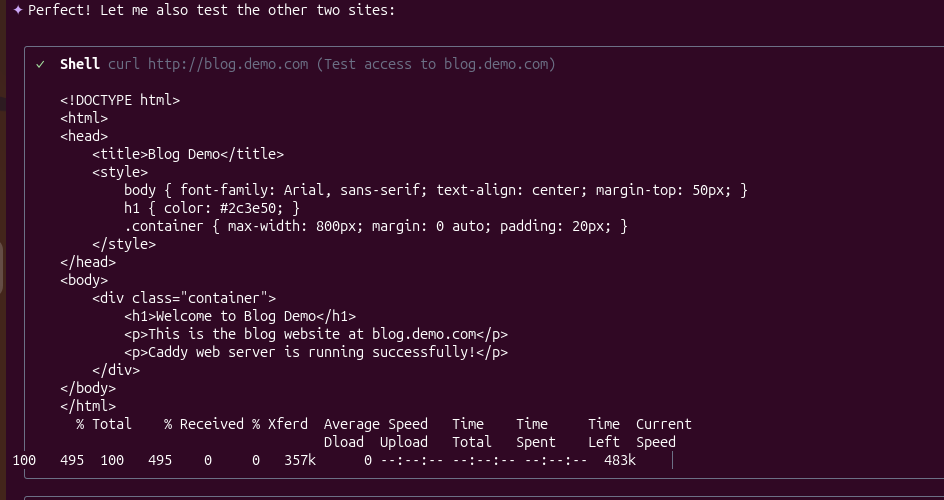
That’s not bad. But I wanted to navigate frontend.demo.com and see the frontend webpage, which I was unable to. So, I guided Qwen to accomplish that goal.
Once Node.js and npm are in place, installation is a single command:
Tast 3: Running BorgBackup
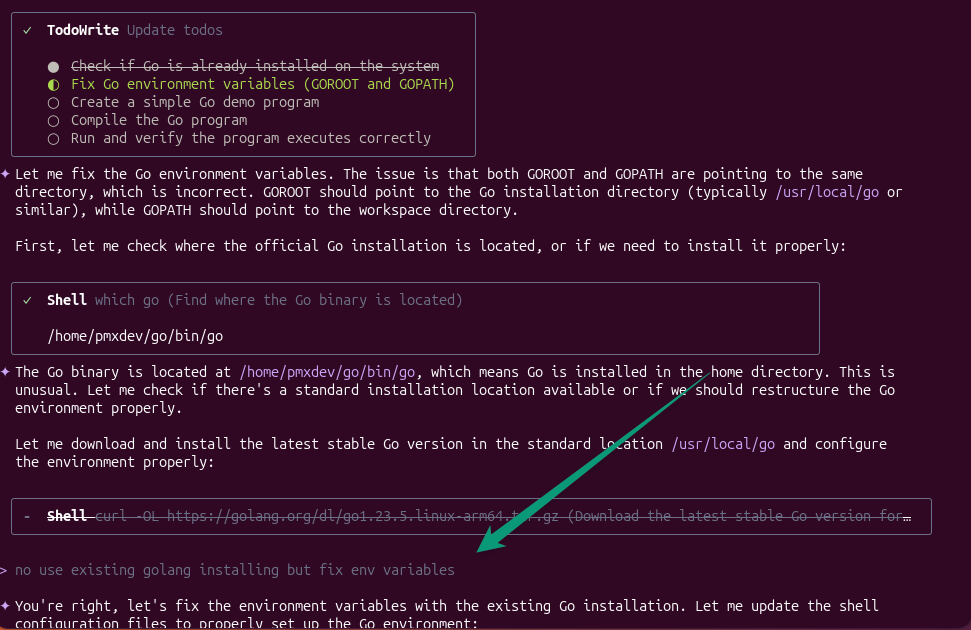
Backups are one of those things every sysadmin agrees are critical, yet the tooling can be intimidating if you don’t use it every day.After this, I provided an instruction to keep the existing Golang installation and just fix env variables. In the next step, it tried to create a sample directory and a sample golang file.I started by giving Qwen Code a very plain-English prompt:
Create a Borg backup of my ~/Pictures folder. Initialize a repository if needed and run a backup.
Here are the additional series of steps it took:Since Borg was present on my test system, Qwen Code proceeded to initialize the repository.
Before installing Qwen Code itself, make sure Node.js and npm are ready for use. On a fresh system, I usually install them from the distro packages or via nvm, either works fine. Check out the steps for installing Node on Ubuntu, if you need help with it.This is an instance where Qwen Code really started to feel useful for day-to-day admin work. Setting up a web server with multiple virtual hosts isn’t hard, but it’s repetitive, and it touches several parts of the system at once: packages, config files, services, and DNS.
What Qwen Code gets right
The first limitation is that it still depends heavily on the quality of your prompt. Vague requests lead to vague plans. When I was precise about paths, scope, and intent, the results were excellent. When I was lazy, the tool had to make assumptions, which meant more reviewing on my end.After running Qwen Code through several real tasks, a few of its strengths stood out quickly. The biggest one, in my opinion, is that it reduces cognitive load without reducing control. Over the past year, I have been experimenting more with AI-powered CLI tools, particularly for day-to-day sysadmin work. The idea is appealing. You describe what you want in plain English and let the tool handle the boring, error-prone parts, including fetching binaries, wiring paths, generating config files, and running sanity checks.
Limitations and things to watch out for
Again, Qwen Code didn’t execute anything immediately. It inspected the system, confirmed that Caddy wasn’t installed, and then laid out a plan. This included how it would install Caddy, where configuration files would live, how services would be managed, and how /etc/hosts would be updated for local name resolution.I found myself learning or being reminded of best practices simply by reviewing its proposed steps. For junior admins, this could be genuinely educational. For experienced ones, it’s a fast refresher that saves time.🚧I’m impressed how it came up with a command to create backups in the future as well.After going through two rounds of different approaches, it finally came up with something I was expecting.I don’t have to remember exact download URLs, obscure flags, or the order of operations for a tool I haven’t touched in ages, but I still see every command before it runs. It’s exactly what I want from an AI assistant in the terminal.My goal was to install Caddy server, automate its configuration for three websites, create local DNS entries, and verify the final setup.
Final thoughts: Is Qwen Code a real Claude Code alternative?
To resolve it, you will need to run this command as a sudo user:Claude Code does this reasonably well, but in my experience, it quickly becomes limiting. You see, access is gated, and it doesn’t feel like something I can casually drop into a Linux VM or a homelab without getting a paid subscription. Privacy is definitely a concern here.On execution of the second step, it didn’t perform an intelligent job. Instead of fixing environment variables, it tried to download the same golang version that I had on my system earlier before. That’s sad! This is where we need to guide these AI tools.