In raw read/write operations for simple key-value pairs, both systems deliver sub-millisecond latency and incredibly high throughput. Memcached uses a multi-threaded, non-blocking architecture, which makes it exceptionally efficient at handling thousands of concurrent connections on multi-core servers without significant locking contention.
Table of Contents
- 1 What are Memcached and Redis?
- 2 Performance: Speed, Throughput, and Multi-Threading
- 3 Data Types and Persistence
- 4 How WordPress object caching works (WP_CACHE, drop-in)
- 5 Redis vs Memcached for WordPress Object Cache
- 6 FAQs
- 6.1 Is Redis faster than Memcached for WordPress?
- 6.2 Can Memcached persist data across server restarts?
- 6.3 Does WordPress support Memcached as an object cache backend?
- 6.4 What is the difference between Redis and Memcached for PHP sessions?
- 6.5 Should I use Redis or Memcached on a VPS with limited RAM?
- 6.6 What is Valkey and does it replace Redis for WordPress caching?
What are Memcached and Redis?
Whether you choose the lean profile of Memcached or the feature-rich capabilities of Redis, RunCloud ensures your site remains lightning-fast, secure, and easy to maintain.Memcached and Redis are both high-performance, open-source, in-memory data stores, but they were designed with different architectural philosophies.In this guide, we will discuss the differences between these two high-performance solutions. We’ll explore why Redis has become the industry standard for complex, data-heavy sites, when Memcached might still be the smarter choice for a resource-constrained VPS. By the end of this post, you will understand which of these services is right for you.Manually managing caching services via SSH can be tricky, especially when configuring PHP-FPM worker pools or adjusting php.ini settings.
Performance: Speed, Throughput, and Multi-Threading
Memcached and Redis differ in how they handle data and the level of persistence they offer. Let’s see howBut which caching backend should you choose: Redis or Memcached?While both provide excellent performance, Redis is often considered superior for complex WordPress environments because it supports advanced data structures and atomic operations. However, for simple key-value caching, the speed difference is usually negligible, meaning the “faster” choice often depends more on your specific server configuration and plugin implementation than the software itself.If you’re using a managed WordPress host or a performance-heavy plugin such as Object Cache Pro, you may find that Memcached performs exceptionally well for basic site speed. Because it’s multi-threaded and doesn’t handle disk writes, it can handle massive bursts of read requests with very little CPU overhead, making it ideal for standard, content-heavy websites.
Data Types and Persistence
Memcached is a distributed memory object caching system designed specifically for simplicity, serving as a “pure” cache to speed up dynamic web applications by alleviating database load.
Memcached: strings only, no persistence
No, Memcached is a purely volatile, in-memory key-value store, and it doesn’t have native support for persisting data to disk. If your server restarts or the Memcached service is stopped, all cached data is permanently cleared and must be rebuilt by your application.The primary difference is that Redis provides persistence, allowing PHP sessions to survive server reboots, whereas Memcached loses all session data upon restart. Additionally, Redis offers better reliability for high-traffic sites due to its ability to handle more complex data types and provide snapshots of session states.Memcached is the “classic” choice for WordPress performance. It’s extremely lightweight and focuses on a single task: storing simple key-value pairs in memory. When using plugins like W3 Total Cache, Memcached is often the default choice because of its simplicity and low resource requirements.
Redis data structures (hashes, sets, lists, sorted sets)
Deciding between Memcached and Redis ultimately comes down to your server resources and the complexity of your WordPress site.Object caching changes this by storing repetitive results in RAM and serving them instantly to your visitors.Suggested read: How to Reduce Cache Misses & Avoid Them: Proven Tips [FIXED]
RDB snapshots and AOF logging explained
Yes, WordPress has native support for Memcached as an object cache backend through the use of a persistent object cache plugin. By dropping an object-cache.php file into your wp-content directory, WordPress can efficiently store and retrieve database query results in RAM rather than querying your MySQL database repeatedly.
- RDB Snapshots: This performs point-in-time snapshots of your dataset at specified intervals (e.g., every 60 minutes if 1,000 keys changed). It is highly efficient for backups and recovery, though it carries a small risk of losing data created between the last snapshot and a crash.
- AOF Logging: This logs every write operation received by the server into a file, which is then replayed upon startup to reconstruct the original dataset. AOF provides much higher data durability than RDB, as it can be configured to sync to disk after every write operation, effectively turning Redis into a reliable, persistent database rather than just a transient cache.
Memcached is generally the better choice for a VPS with extremely limited RAM because it has a smaller memory footprint and lower overhead than Redis. Redis includes more features, such as data persistence and complex data structures, which consume more memory resources even when idle.
How WordPress object caching works (WP_CACHE, drop-in)
Sign up for your RunCloud account and experience painless server management today.Choosing between Redis and Memcached for WordPress object caching can be confusing, but understanding how they interact with your database is key to unlocking faster page load times. Redis, by contrast, is an advanced in-memory data structure store that functions as a cache, a primary database, and a message broker, offering a much richer feature set than a traditional key-value cache.
- Default Behavior: Without a drop-in, WordPress uses its internal WP_Object_Cache class. This class stores data in PHP memory, but that memory is wiped clean at the exact moment a page finishes loading. The next time a user visits, WordPress must query the database again.
- The Interception: When the object-cache.php file exists, WordPress skips the default WP_Object_Cache class and use the code defined inside that drop-in file instead.
- The Persistent Connection: The drop-in file contains the logic to connect to an external, memory-based storage server (like Redis or Memcached). Because this storage server exists outside the scope of a single PHP request, the data persists between page loads. Now, when WordPress needs a database result, it asks the drop-in file, which fetches it from RAM (the cache server) instead of triggering a slow MySQL query.
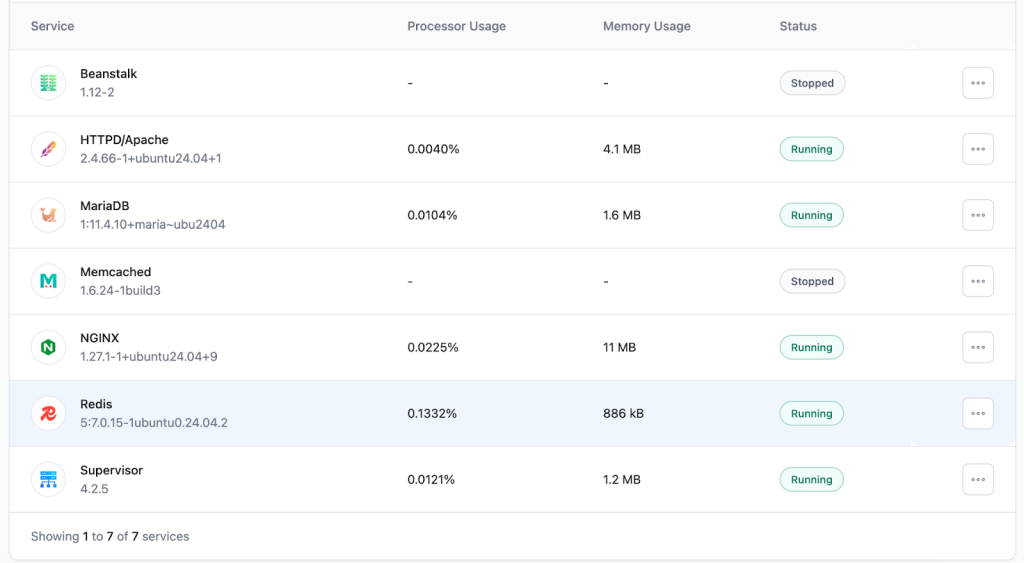
However, for most modern WordPress environments, especially those using WooCommerce, complex page builders, or high-volume transient data, Redis is the superior option.
Redis vs Memcached for WordPress Object Cache
When comparing performance for transients (temporary database entries including plugin data, API responses, or WooCommerce cart items) and session data, Redis is the clear winner.
Memcached with W3 Total Cache or Object Cache Pro
Suggested read: Everything You Need To Know About WordPress Object CachingIf your WordPress site feels sluggish despite having a great theme and high-quality hosting, the bottleneck is likely your database.
Redis with WP Redis / Object Cache Pro
Memcached is designed to be volatile; it offers no mechanism to save data to disk, meaning all cached items are lost instantly if the service restarts.Unlike Memcached, Redis can handle complex data structures, allowing WordPress to store related data together in “hashes” or “sets”. This means that when WordPress needs to update a piece of information, it can talk to Redis more intelligently, reducing the need to constantly delete and rewrite large chunks of data. Every time a visitor loads a page, WordPress performs dozens of queries to fetch settings, menu structures, and widget content from your MySQL database.
Which performs better for WP transients and session data?
Memcached is strictly a key-value store where the values are treated as unstructured blobs of data (strings). It doesn’t understand the content of the data it stores, meaning if you need to update a single element within a large object, your application must retrieve the entire object, modify it in application memory, and write the whole blob back to the cache.
- Why for Transients: WordPress transients often need to be expired or searched based on specific criteria. Because Redis supports sorted sets and hashes, it can manage these transient expirations more efficiently than Memcached.
- Why for Sessions: Because Redis supports persistence, your user session data remains intact even if you restart your server or clear the cache. Memcached would wipe all active user sessions if the server restarts, forcing your visitors to log in again.
Suggested read: LiteSpeed Cache WordPress Plugin Configuration TutorialIf you’re running a lightweight site on a resource-constrained VPS, Memcached’s minimal memory footprint makes it an excellent choice for basic query acceleration.While early versions of Redis were single-threaded, modern Redis supports multi-threaded I/O to improve performance on high-end hardware, while maintaining a single-threaded execution model for command processing to avoid the complexities of data locking.
Suggested read: WP Rocket vs LiteSpeed Cache: Which One is Best in 2026Redis has become the industry standard and the modern “default” for most high-performance WordPress hosts. Plugins such as WP Redis or the enterprise-grade Object Cache Pro allow WordPress to use Redis’s advanced data structures.Suggested read: How To Use Redis Object Cache To Speed Up Dynamic WordPress SiteIn WordPress, a drop-in is a special type of file that WordPress core checks during its initialization. If WordPress finds a file named object-cache.php inside your /wp-content/ directory, it automatically loads it instead of using its default (non-persistent) caching mechanism.Suggested read: How to Set Up WooCommerce Caching: The Ultimate Guide in 2026