Jon Seager, VP Engineering at Canonical, also specifically pointed out crates.io, the official Rust package registry, noting their interest in its security implementation and in reducing the number of “potentially unknown dependencies.” Particularly for use cases involving async support, HTTP handling, and cryptography in regulated environments.Canonical joining the Rust Foundation as a Gold Member is an important signal of Rust’s growing role in large-scale systems.For developers working with Rust on Ubuntu, this is more interesting. Canonical has explicitly stated that improving the Rust developer experience on Ubuntu is a direct goal of this membership.It has been pushing Rust into Ubuntu’s core for a while now. We covered how Ubuntu 25.10 replaced sudo with sudo-rs, the memory-safe Rust rewrite of the classic tool, and how the same release also swapped GNU Coreutils with uutils, its Rust-based equivalent.
What’s happened?
These were not small changes, as replacing decades-old C tooling at the core of a Linux distribution is a significant bet on a language. Now, Canonical is making that bet formal.Canonical is the company behind Ubuntu, one of the most widely used Linux distributions around. Beyond just shipping an OS, the company provides long-term security maintenance and support for a massive portfolio of open source packages, and its products span everything from desktop and server to cloud infrastructure and IoT.Suggested Read 📖: Here’s what to expect from Ubuntu 26.04 LTSDr. Rebecca Rumbul, Executive Director and CEO of the Rust Foundation, had this to say during the announcement:
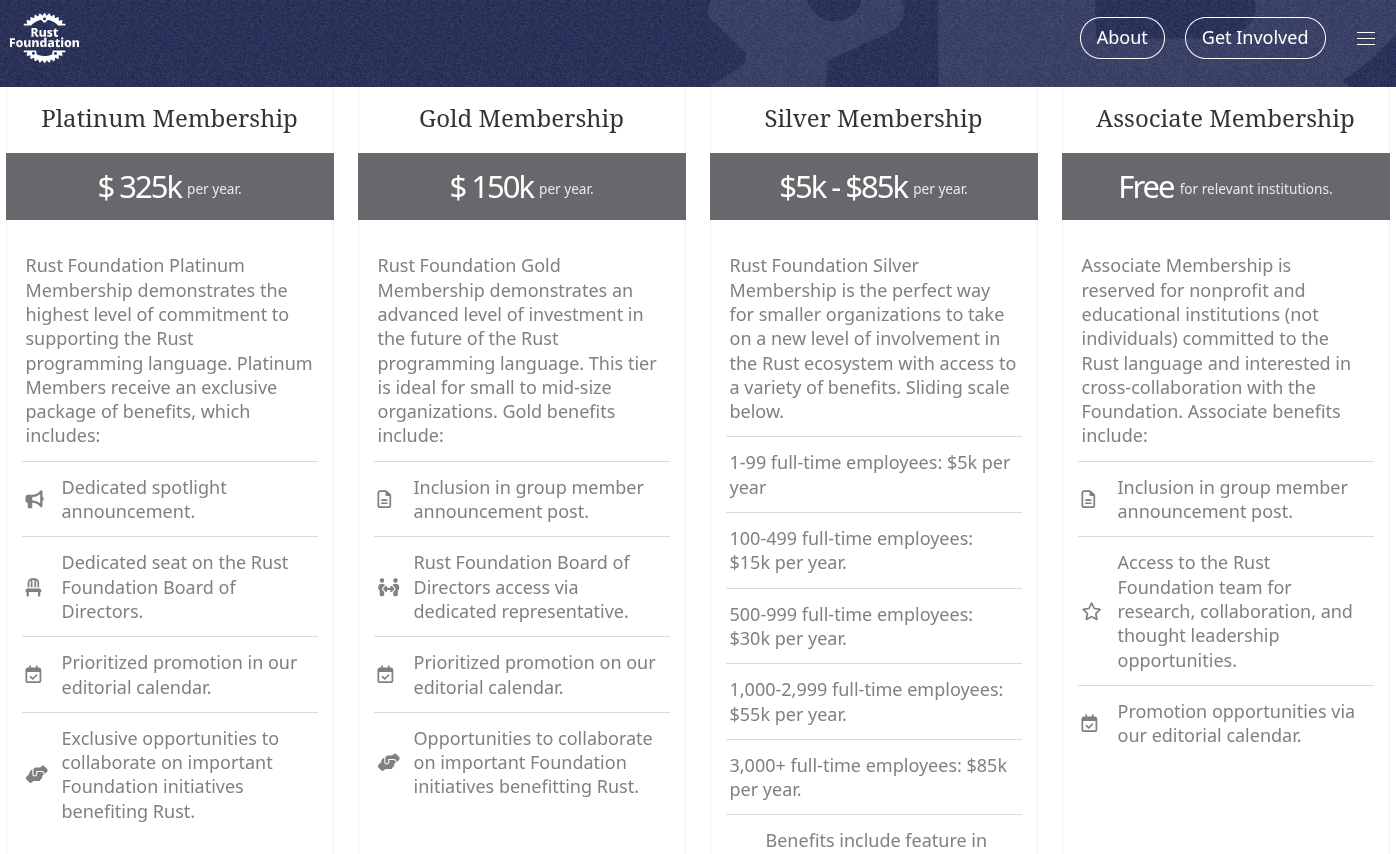
Rust has become a foundational technology for building safe and reliable systems, and its continued success depends on strong collaboration between the open source community and the organizations bringing it into production.By putting 0,000 a year behind the organization that stewards the Rust programming language, Canonical has joined in to engage more directly in language and ecosystem governance while also working on improving the Rust developer experience on Ubuntu.
What this means for you?
For regular Ubuntu users, not much changes. The Rust-based components already shipping in Ubuntu, like sudo-rs, were already in place long before this membership happened.With this membership, the company gets some perks like a dedicated representative on the Rust Foundation’s Board of Directors, promotion on the Foundation’s editorial calendar, and opportunities to collaborate on the Foundation’s initiatives.The company has joined the Rust Foundation as a Gold Member.
That said, better toolchain support and more up-to-date packages in the Ubuntu repositories would be a natural outcome.